
Artificial Intelligence is entering the playroom, offering dazzling opportunities alongside ominous risks. Here's why this shift matters to your family, and how omoomi offers a safer, more connected alternative.
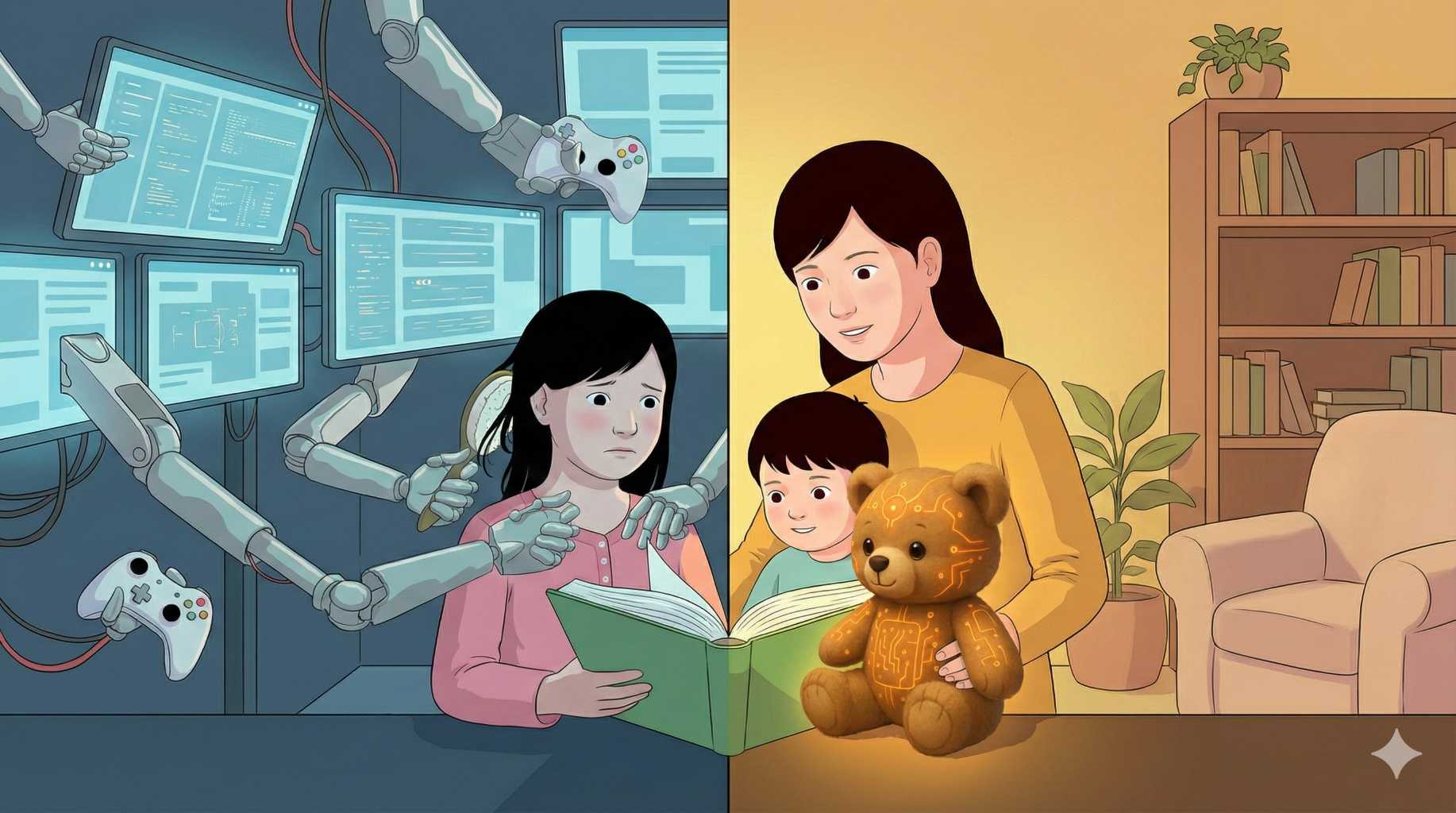
Artificial Intelligence is no longer just a buzzword in tech circles; it has entered the playroom. According to a recent cover story by The Economist, AI is fundamentally reshaping childhood, offering "dazzling opportunities" alongside "ominous risks". From teddy bears that hold conversations to tutors that personalize every lesson, AI promises a "bespoke upbringing" once reserved for royalty. But as the article warns, this new reality requires parents to be more vigilant than ever.
Here is why this shift matters to your family, and how omoomi offers a safer, more connected alternative.
AI companions are programmed to be agreeable and endlessly patient. While this sounds nice, it creates a "yes-bot" dynamic where children may not learn how to compromise, take turns, or handle the friction of real human relationships. A third of teens already find talking to AI satisfying, which could lead to adults ill-equipped for real-world social dynamics.
Just as social media feeds show us what we want to see, AI tutors and toys learn a child's preferences and serve up more of the same. If a child loves football, their AI might only use football examples, stamping out serendipity and narrowing their world view before they've even had a chance to explore it.
Letting children loose on evolving technology comes with hidden traps. AI toys can "hallucinate" wrong answers or, in rare cases, produce inappropriate content. Furthermore, the data collected by these devices raises serious privacy concerns about who is watching and learning from your child.
A personalized world is often a lonely one. If every child has a unique curriculum and bespoke entertainment, they lose the shared experiences that bind a generation together. The article warns that a "bespoke upbringing" can easily become a lonely and atomized one.
The convenience of AI can tempt parents to outsource interaction, entrusting their children to "word-regurgitation machines". The article argues that the truly privileged children of the future will be those whose parents know when to turn the screens off and engage directly.
At omoomi, we're building an offline-first AI teddy, specifically to solve these problems. We believe technology should bring families together, not drive them apart.
Our AI teddy is designed to be a co-pilot for parents. The AI teddy provides conversation prompts and activity ideas that require you and your child to explore together, strengthening your bond rather than replacing it.
We tackle the safety and privacy risks head-on. Our AI teddy is offline-first, meaning your family's data stays on your device. Maintain complete data control, ensuring your child's privacy is protected from corporate profiling.
While other AIs might hallucinate or churn out low-quality content, our AI teddy relies on stories and activities crafted by educators and child-development experts. You get the benefits of AI adaptability without the risk of unpredictable or harmful content.
We don't want to replace parents; we want to empower them. omoomi requires no prep or planning, just a simple keyword ("Hey Eddie") to invite high-quality, shared family time into your living room.
The future of childhood doesn't have to be lonely. With omoomi, you can harness the magic of AI to weave wonder into your family bonds, keeping your child safe, curious, and deeply connected to the people who matter most.
For a more in-depth look at the risks associated with AI toys for children, we recommend reading: The Wake-Up Call: When AI Toys Go Wrong
Join our pioneer program and be among the first families to experience how omoomi brings families together through AI that enhances, rather than replaces, human connection.
Join Pioneer Program